Industry Insights · Government Loans
What a $1 Million Tariff Award Bought: A Powder-Coat Line in Brandon
A Brandon manufacturer got $1 million from Ottawa's tariff program to bring powder coating in-house. Here is what that money covers, what the owner still had to find, and what the release leaves out.
October 7, 2026 · 5 min read
A tariff award pays for half the project.
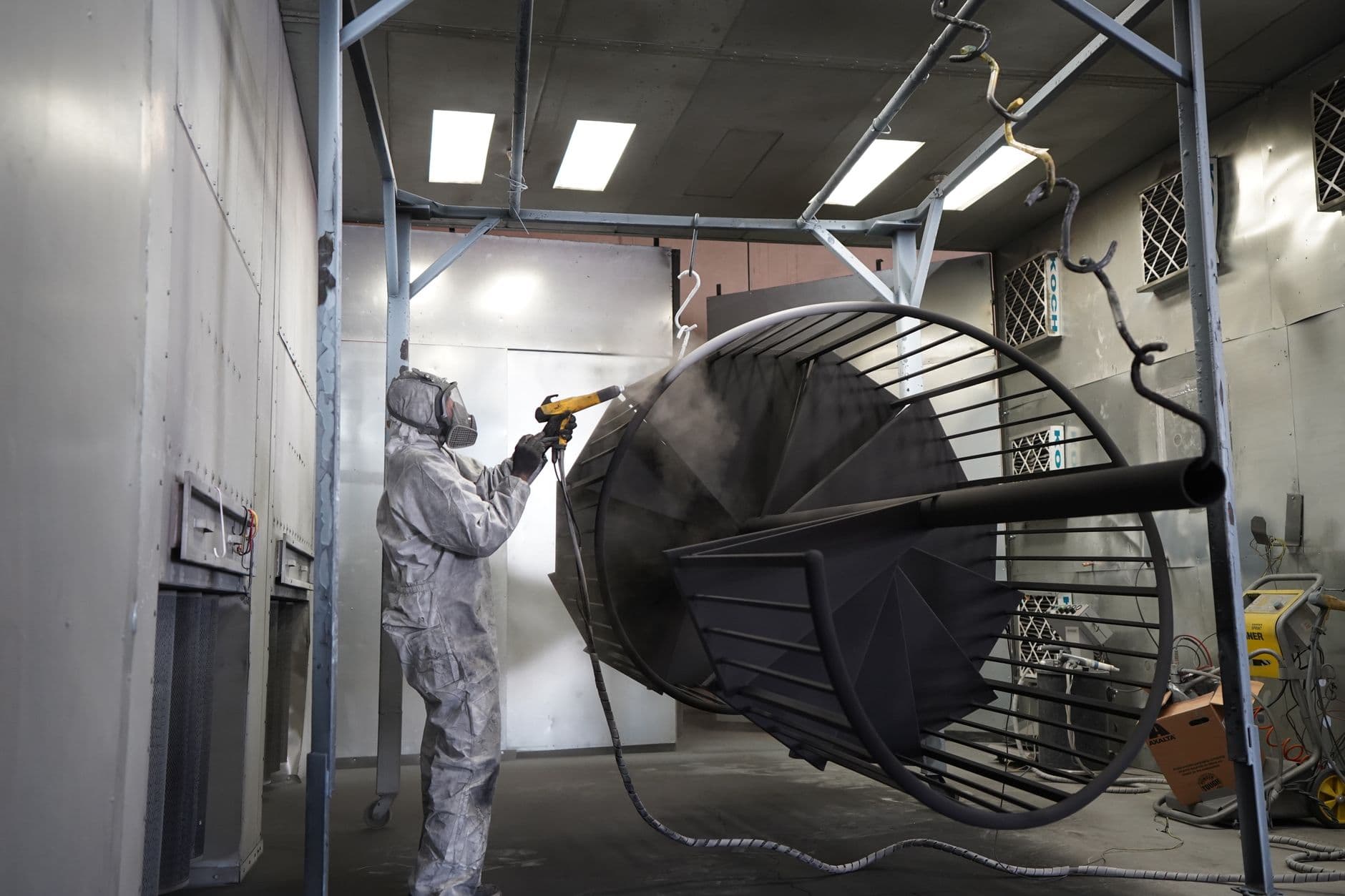
On September 11, PrairiesCan announced $1,000,000 for Atom-Jet Industries, a farm-equipment maker in Brandon, Manitoba. The money goes to a 4,000 square foot addition and an in-house powder-coat and sandblast line. The release expects eight new jobs.
It is the clearest worked example we have seen of a pivot project under Ottawa's tariff program, the Regional Tariff Response Initiative. It also leaves out the number most owners want to know: what Atom-Jet put in itself.
The program's own rules tell you that part.
Atom-Jet brought a supplier's step in-house
Atom-Jet builds seeding and fertilizer equipment and leans on original equipment manufacturers for sales. Powder coating and sandblasting were steps done somewhere else. Parts that needed coating left the plant and came back.
Bringing that step inside does three things, and the PrairiesCan release names all three. Costs go down. Lead times get shorter. Capacity goes up.
The program calls this supply chain resilience. It sits on the Prairie agency's list of eligible pivot activities next to process modernization, equipment adoption, market diversification and anything else that cuts trade risk.
The release also says Atom-Jet will sell more directly, in Canada and Australia, and lean less on OEM customers and the U.S. market. That is market diversification, a second eligible activity inside the same project. One project, two boxes ticked.
The $1 million line is half the project, at most
The Prairie rule for a pivot project reads two ways at once. Non-repayable money goes up to $1 million. It also goes up to 50% of eligible costs.
So $1 million is a ceiling on the cheque and a ceiling on the share. To draw the full amount, the project needs at least $2 million in eligible costs. The other half, at minimum, comes from outside the program.
That is the program's own arithmetic, not ours.
Above $1 million the money changes shape. Larger projects can get repayable contributions at up to 75% of eligible costs, interest-free. Which tier Atom-Jet landed in is not in the release, and we come back to that below.
Eligible costs are broad on the pivot side: wages and materials for the project, machinery and equipment, consultants, and the cost of reaching new markets. A coating booth and a blast cabinet fit. So does the labour to install them.
What the owner still had to find
The other 50% has to come from a source that is not PrairiesCan. It has to be confirmed when you apply and confirmed again before approval. In-kind contributions do not count, and the Ontario guide says cash from forecast revenue does not count either.
What does count is plain. Cash in the bank. The unused room on a line of credit. A lender's letter.
The lender's letter can be conditional on the award. You do not need a closed loan on the day you apply. You need a lender willing to write that the money is there if Ottawa says yes, and that is what PrairiesCan accepts as proof.
For most owners that half is a government-backed or conventional loan, a term loan on the equipment and the building work, with the line of credit held back for the gap. The award does not pay for buying land or a building, refinancing old debt, or bonuses and dividends. Atom-Jet's 4,000 feet is an expansion, not a purchase, and the release does not say which dollars landed on the building and which on the coating line.
What the release does not say
Two things, and both matter to your file more than the headline.
First, whether the $1 million is repayable. The release says "$1,000,000 through RTRI" and stops. The amount fits the non-repayable tier exactly, and the release still does not say so, and we will not say it for them.
If it were on the repayable side, the shape is published. One year of grace after the project ends. Then 60 equal monthly payments. No interest.
Second, this is a Prairie file. Manitoba businesses apply to PrairiesCan. A business in southern Ontario applies to FedDev Ontario, a different agency with its own guide and its own readers.
The headline terms match across the agencies: $1 million, 50%, done by March 31, 2029. The paperwork and the people reading it do not. A Brandon award tells you the program is paying out. It tells you nothing about your file in Mississauga.
PrairiesCan also says the hard line plainly: the process is competitive, and not every application that reaches a full review gets an offer.
The dates give you more room than you think
Pivot costs can count back up to 12 months before you apply. In the Prairies they can go no earlier than March 21, 2025. If you ordered the booth last winter, that invoice may still be in play.
The project has to finish by March 31, 2029. Intake stays open until December 31, 2028 or until the money is committed. Ottawa's own line is to apply as early as possible, and on this one we agree with Ottawa.
Other government money can stack on top. Provincial or municipal programs can sit alongside the federal award, up to 90% of project costs in total, as long as nobody pays for the same invoice twice. The last 10% is yours no matter what.
We walked through the full pivot rulebook in our pivot projects explainer, including the costs the program refuses.
What you do with this on Monday
Take the project you have been putting off and write down two numbers. The first is the total eligible cost. The second is half of it.
The second number is the one that decides whether your application is ready. You need to show it in a bank statement, an unused line, or a lender's letter that says yes if Ottawa says yes. A good project with no proof of the second number is not an application yet.
That is where we spend our time: putting the owner's half together, with a lender who will write the conditional letter, and building the file so the agency's reader can see the project the way you see it. If tariffs have raised your costs or cut your sales this year, start with our tariff response page and bring the two numbers.
Discover what your business qualifies for.
One assessment reads your situation the way a lender does. You leave knowing the path forward.